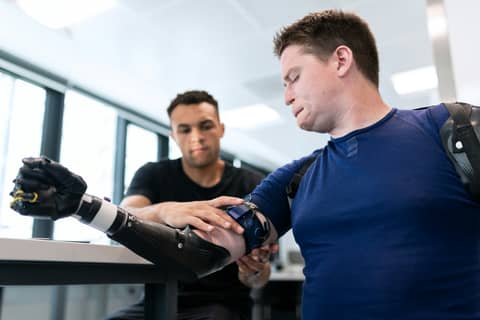
Member 1h ago
in communityWhat is a prosthesis for a hip replacement? A hip replacement prosthesis is an artificial medical device used to replace a damaged or worn-out hip joint. It restores mobility and relieves severe joint pain caused by conditions like arthritis or fractures. Most implants last 15 years or more.
Wikipedia
+3
A standard total hip prosthesis consists of three main parts:
Sharma Orthopedic
+1
The Stem: A metal piece inserted into the hollow center of the thighbone (femur).
The Ball: A metal or ceramic ball that replaces the damaged head of the thighbone.
The Socket (Cup): A metal shell placed into the pelvic bone, usually lined with a smooth plastic (polyethylene) or ceramic spacer.
American Academy of Orthopaedic Surgeons AAOS
Common Bearing Surface Combinations
The materials chosen for the "bearing surfaces" (the ball and the socket liner) affect the durability of the prosthesis:
Metal-on-Plastic: A metal ball gliding against a plastic liner; highly reliable with a long track record.
Ceramic-on-Plastic: A ceramic ball with a plastic liner, often used to reduce wear.
Ceramic-on-Ceramic: A ceramic ball and ceramic socket liner; these are extremely durable and produce very little wear debris, making them ideal for younger, active patients.
National Institutes of Health (.gov)
+4
Types of Prosthesis Fixation
Cemented: The prosthesis is secured to the bone using a special bone cement (acrylic polymer).
Cementless (Press-fit): The implant has a specialized porous surface designed for the patient's natural bone to grow into and fuse with the prosthesis.
American Academy of Orthopaedic Surgeons AAOS
+4
To explore more about prosthetic materials, longevity, and surgical options, you can review detailed clinical guidelines on the American Academy of Orthopaedic Surgeons (AAOS) or the Mayo Clinic overview on hip procedures.
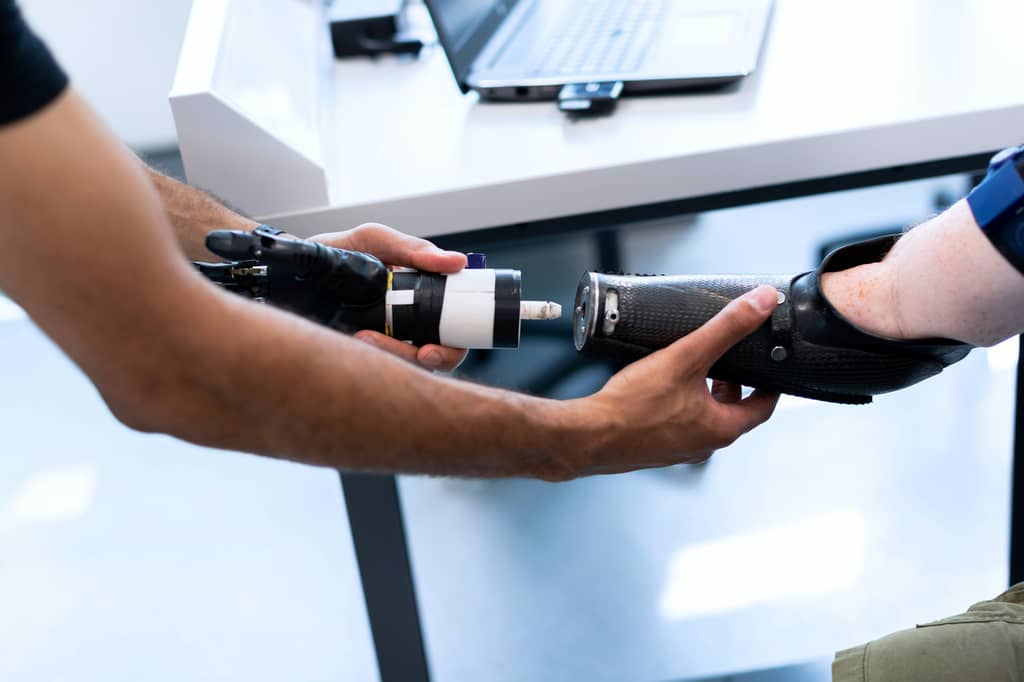
Member 6h ago
in communityWhat is the latest technology in prosthetics? Prosthetics are artificial devices designed to replace missing body parts, restore mobility, and improve the quality of life for individuals with limb loss or congenital differences. They range from basic cosmetic additions to highly advanced, robotic systems controlled by muscle signals.
History & Evolution
* Ancient Origins: The earliest known prosthetic is the "Cairo toe," an artificial wooden and leather big toe discovered on an Egyptian mummy dating back to between 950B.C. and 710B.C.
* Modern Materials: Historically built from heavy wood and iron, today's artificial limbs utilize lightweight, durable materials like carbon fiber, titanium, and advanced plastics.
Types & Technology
* Myoelectric Prosthetics: These advanced artificial limbs are wired to detect electrical signals from the user's remaining muscles. This allows the user to operate the prosthetic through natural thought patterns.
* 3D Printing: This innovative manufacturing method allows for highly customized prosthetics at a fraction of the cost, dropping from tens of thousands of dollars down to around $4000 in some instances.
Biomechanics & Limitations
* Increased Energy Expenditure: Walking with a traditional lower-limb prosthesis requires significant effort. Users can expend 20% to 40% more energy compared to walking on two natural legs.
* Not a Permanent Fix: A custom prosthetic device typically lasts between 3 to 5 years. Replacements or major readjustments are frequently required due to natural weight fluctuations, body changes, or device wear and tear.
Real-World Use
* Extreme Feats: Modern technology is robust enough to enable remarkable achievements, such as when double-amputee Zac Vawter used two mind-controlled prosthetic legs to climb the 103 floors of Chicago's Willis Tower in 2013.
* Global Need: The World Health Organization (WHO) estimates that nearly 30 million people require prosthetic and orthotic devices globally, though access remains limited in many developing regions.
If you or someone you know is navigating limb loss, you can consult the Amputee Coalition for expert resources, educational tools, and support groups.
https://amputee-coalition.org/resources/prosthetic-vs-prosthesis-the-correct-usage/

Member 6h ago
in communityWhat are the 4 types of prosthetics? Prosthetics are primarily categorized into four main types based on the missing body part and the function they serve: Upper Limb, Lower Limb, Cosmetic, and Specialized prosthetics.
Here is a quick breakdown of each type:
1. Upper Limb Prosthetics
These replace missing arms, hands, or fingers. They are further categorized into:
* Passive: Static, non-functional devices designed solely for aesthetic purposes.
* Body-Powered: Cable-operated devices controlled by the user's shoulder and upper body movements.
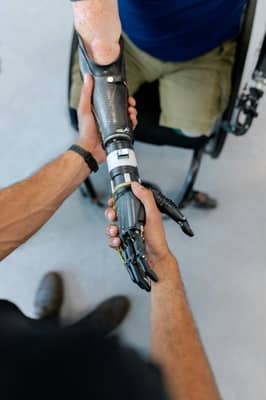
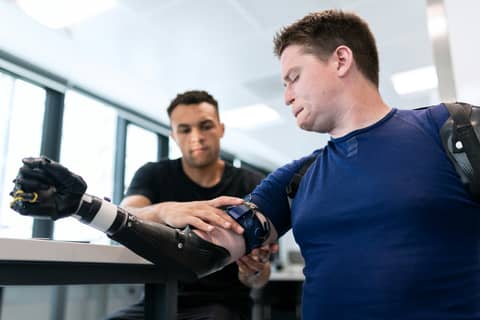
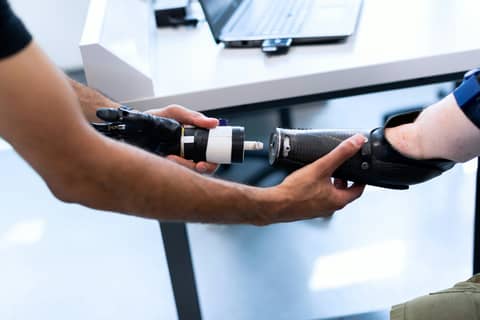
* Myoelectric (Bionic): Advanced devices that use sensors to read muscle signals in the residual limb, enabling natural movement.
2. Lower Limb Prosthetics
These replace missing legs, feet, or hips. The most common variations are:
* Transtibial (Below-knee): Designed to replace everything from just below the knee down. These use the user's natural knee joint, allowing for easier, more natural movement.
* Transfemoral (Above-knee): More complex devices that replace everything from the hip down, requiring artificial components for both the knee and ankle.
* 3. Cosmetic Prosthetics (Passive Prostheses)
Focusing entirely on aesthetics, cosmetic prosthetics are custom-made to replicate the exact look, skin tone, shape, and even details like veins and nails of a natural limb or body part (such as a nose or ear). While they offer minimal physical function, they provide vital psychological and emotional confidence for the wearer.
4. Specialized Prosthetics
These are activity-specific devices engineered to help users perform highly specific tasks, hobbies, or sports. Common examples include running blades for track athletes, waterproof limbs for swimming, or terminal devices fitted with tools (like hooks or clamps) for manual labor or weightlifting.
OP Centers
To learn more about your options or the prosthetic fitting process, consult authoritative resources like the Ottobock Prosthetics Guide or read the Cleveland Clinic Prosthesis Overview for comprehensive information.
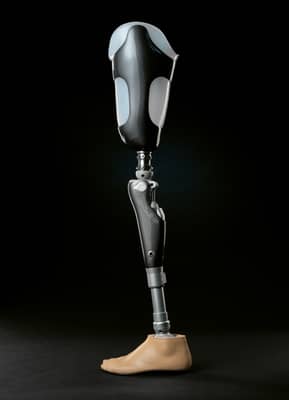
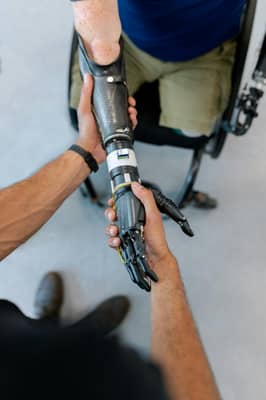
Member 1d ago
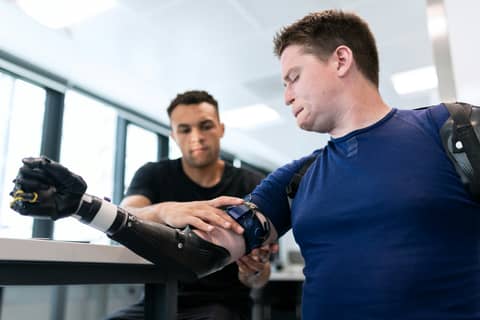
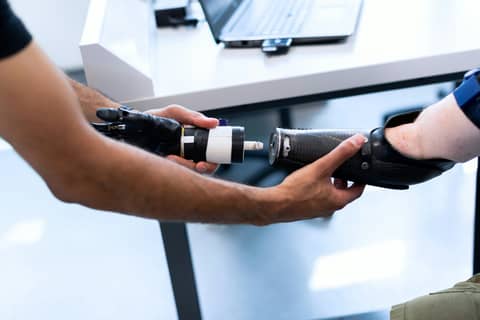
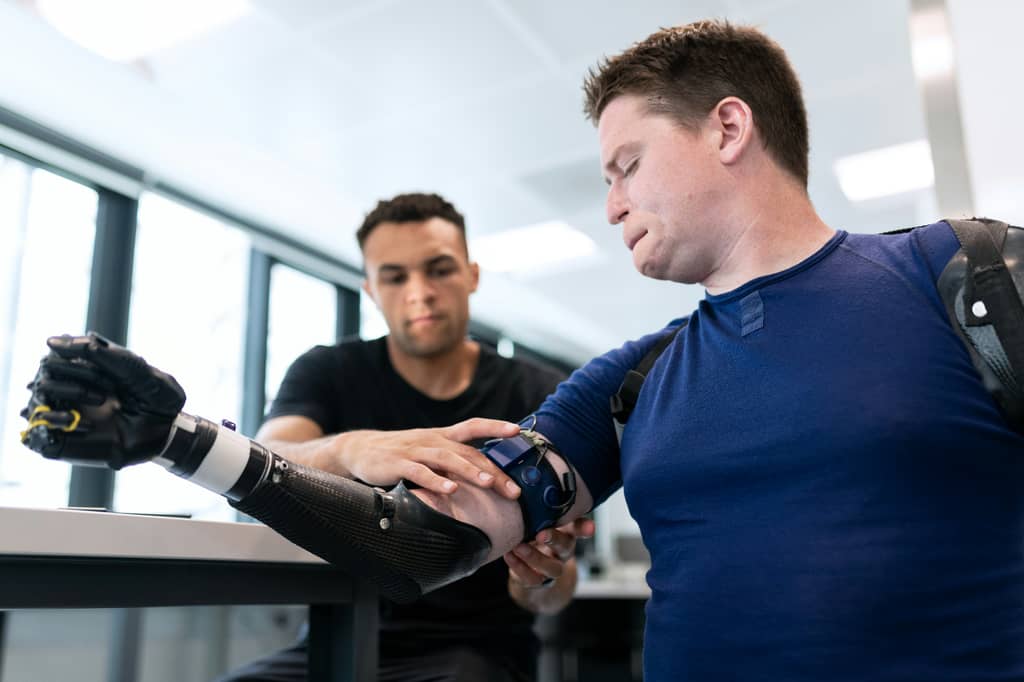
in communityBasketball Devices for Arm Amputees Basketball is a game involving a lot of varied arm motion,
such as dribbling, catching and shooting the ball. Arm
amputees who use a device to play basketball need something
that helps with these motions, but is safe when they come
in contact with other players. The Mill’s Rebound Pro
Basketball Hand by TRS is designed especially for basketball.
Made of a compliant polymer material, the Rebound Pro is
strong but flexible. It has a large palm with small friction discs
on the inside surface to help with handling and grasping the
ball. The Rebound Pro comes in one model, which is suitable
for adolescents and adults.
The HP Hoopster, by TRS, is molded from high performance
polymers. It absorbs and returns the energy required to
expertly handle, dribble and shoot a basketball, one-handed.
An angled, stainless steel wrist adapter and coupler allows the
extension angle to be customized and locked in for
each user. The HP Hoopster is suitable for teenagers
and adults.
When catching and shooting the ball, it is helpful if both
elbows are in the flexed position. One below elbow amputee
has a custom-made socket with a bend incorporated at the
elbow for this purpose. A silicone socket is worn on the insi

Member 1d ago
in communityWhy Prosthesis In medicine, a prosthesis (pl.: prostheses; from Ancient Greek: πρόσθεσις, romanized: prósthesis, lit. 'addition, application, attachment'),[1] or a prosthetic implant,[2][3] is an artificial device that replaces a missing body part, which may be lost through physical trauma, disease, or a condition present at birth (congenital disorder). Prostheses may restore the normal functions of the missing body part,[4] or may perform a cosmetic function.
A person who has undergone an amputation is sometimes referred to as an amputee, Rehabilitation for someone with an amputation is primarily coordinated by a physiatrist as part of an inter-disciplinary team consisting of physiatrists, prosthetists, nurses, physical therapists, and occupational therapists.[5] Prostheses can be created by hand or with computer-aided design (CAD), a software interface that helps creators design and analyze the creation with computer-generated 2-D and 3-D graphics as well as analysis and optimization tools.
Types
A person's prosthetic device should be designed and assembled to meet their individual appearance and functional needs. Depending on personal circumstances, co-morbidities, budget or health insurance coverage, and access to medical care, decisions may need to balance aesthetics and function. In addition, for some individuals, a myoelectric device, a body-powered device, or an activity-specific device may be appropriate options. The person's future goals and vocational aspirations and potential capabilities may help them choose between one or more devices.[citation needed]
Craniofacial prostheses include intra-oral and extra-oral prostheses. Extra-oral prostheses are further divided into hemifacial, auricular (ear), nasal, orbital and ocular. Intra-oral prostheses include dental prostheses, such as dentures, obturators, and dental implants.
Prostheses of the neck include larynx substitutes, trachea and upper esophageal replacements,
Some prostheses of the torso include breast prostheses which may be either single or bilateral, full breast devices or nipple prostheses.
Penile prostheses are used to treat erectile dysfunction, perform phalloplasty procedures in men, and to build a new penis in female-to-male gender reassignment surgeries.
Limb prostheses
Limb prostheses include both upper- and lower-extremity prostheses.
Upper-extremity prostheses are used at varying levels of amputation: forequarter, shoulder disarticulation, transhumeral prosthesis, elbow disarticulation, transradial prosthesis, wrist disarticulation, full hand, partial hand, finger, partial finger. A transradial prosthesis is an artificial limb that replaces an arm missing below the elbow.
An example of two upper-extremity prosthetics, one body-powered (right arm), and another myoelectric (left arm)
Upper limb prostheses can be categorized in three main categories: Passive devices, Body Powered devices, and Externally Powered (myoelectric) devices. Passive devices can either be passive hands, mainly used for cosmetic purposes, or passive tools, mainly used for specific activities (e.g. leisure or vocational). An extensive overview and classification of passive devices can be found in a literature review by Maat et.al.[7] A passive device can be static, meaning the device has no movable parts, or it can be adjustable, meaning its configuration can be adjusted (e.g. adjustable hand opening). Despite the absence of active grasping, passive devices are very useful in bimanual tasks that require fixation or support of an object, or for gesticulation in social interaction. According to scientific data a third of the upper limb amputees worldwide use a passive prosthetic hand.[7] Body Powered or cable-operated limbs work by attaching a harness and cable around the opposite shoulder of the damaged arm. A recent body-powered approach has explored the utilization of the user's breathing to power and control the prosthetic hand to help eliminate actuation cable and harness.[8][9][10] The third category of available prosthetic devices comprises myoelectric arms. This particular class of devices distinguishes itself from the previous ones due to the inclusion of a battery system. This battery serves the dual purpose of providing energy for both actuation and sensing components. While actuation predominantly relies on motor or pneumatic systems,[11] a variety of solutions have been explored for capturing muscle activity, including techniques such as Electromyography, Sonomyography, Myokinetic, and others.[12][13][14] These methods function by detecting the minute electrical currents generated by contracted muscles during upper arm movement, typically employing electrodes or other suitable tools. Subsequently, these acquired signals are converted into gripping patterns or postures that the artificial hand will then execute.
In the prosthetics industry, a trans-radial prosthetic arm is often referred to as a "BE" or below elbow prosthesis.